
Store and warehouse management system is a topic more manufacturers are researching as they look to modernize operations, and this guide breaks down exactly what it involves and how to approach it in practice.
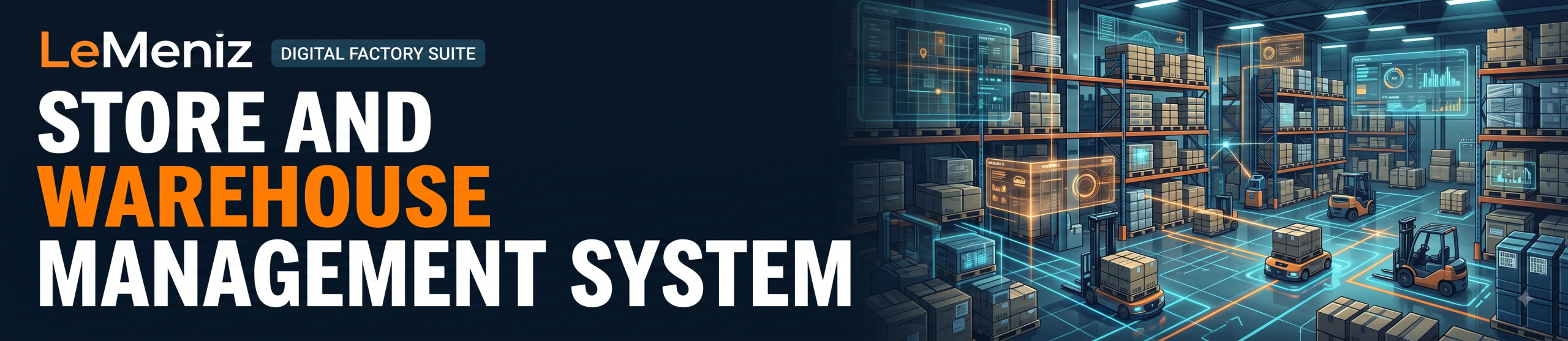
Warehouse layouts often evolve organically rather than by design, leaving high-turnover items stored far from shipping while rarely used items occupy prime, easily accessible space. LeMeniz’s Store and Warehouse Management System, part of our Digital Factory suite, brings data-driven organization to your storage operations.
Common Warehouse Inefficiencies
Without structured tracking, warehouses accumulate inefficient storage patterns over time: items placed wherever space was available, inconsistent labeling, and no objective basis for deciding which items deserve the most accessible locations.
What LeMeniz’s System Provides
- Data-driven slotting recommendations based on actual pick frequency and volume
- Real-time location tracking for every stored item
- Consistent, system-enforced labeling reducing search time and picking errors
- Integration with production and inventory data for full material visibility
Optimization Based on Real Data
Rather than relying on a warehouse manager’s general impression of which items move quickly, LeMeniz’s system tracks actual pick frequency by location, making it possible to objectively identify which items deserve prime storage positions.
Keeping Optimized Layouts in Place
Once layouts are optimized, LeMeniz’s tracking ensures items stay in their designated positions rather than drifting back into ad hoc storage patterns during busy periods, a common failure point for one-time layout improvement projects.
Optimize Your Warehouse With LeMeniz
LeMeniz has been helping manufacturers improve material flow and storage efficiency since 2016. Contact our team to bring data-driven organization to your warehouse.
Store And Warehouse Management System: Key Takeaways
Getting store and warehouse management system right is less about chasing the latest trend and more about building a habit of measuring before you change anything. Teams that succeed usually start with a single, well-defined process, track it consistently, and only then expand what they’ve learned to the rest of the plant. That disciplined, incremental approach to store and warehouse management system tends to outperform a single big-bang rollout, because each step is validated with real data before the next one begins.
If you’re evaluating store and warehouse management system for your own operation, it helps to talk with a team that has actually implemented it elsewhere, not just read about it. LeMeniz Technologies has supported manufacturers since 2011, and we’re happy to walk through real examples of store and warehouse management system in practice before you commit to anything.
For broader context on manufacturing modernization standards. To see how store and warehouse management system fits into a complete digital factory rollout, explore our Digital Factory suite from LeMeniz Technologies.
Teams rolling out store and warehouse management system for the first time often underestimate how much of the early value comes from simply having consistent, accurate data to look at, rather than from any single advanced feature. Getting the basics right and building the habit of reviewing that data regularly tends to matter more in the first few months than choosing the most sophisticated available option.
A well-run store and warehouse management system also pays off during audits and stock counts, since accurate, up-to-date records mean physical counts match the system far more often, cutting down the time spent reconciling discrepancies at quarter-end.
A Quick Checklist for Store And Warehouse Management System
Before rolling this out plant-wide, it helps to confirm three things: that the team responsible for store and warehouse management system has clear ownership of the data, that there’s a simple way to review results on a fixed schedule, and that early wins get shared back with the floor so momentum doesn’t stall after the first few weeks.