
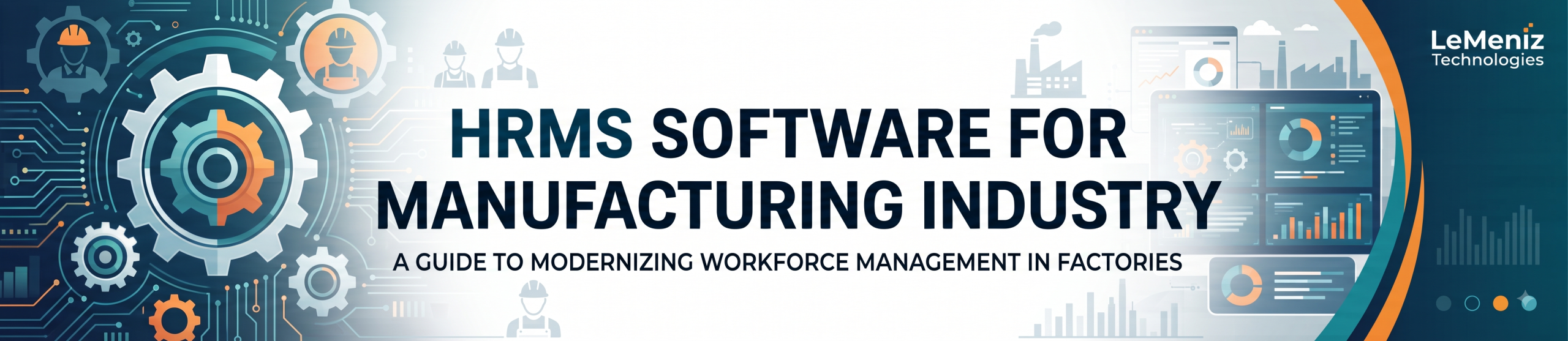
Hrms software manufacturing industry is a topic more manufacturers are researching as they look to modernize operations, and this guide breaks down exactly what it involves and how to approach it in practice.
Human resources in a manufacturing environment faces challenges that generic office HR software simply isn’t built for: shift-based scheduling, skills-based job assignment, and safety-critical compliance training. LeMeniz’s HRMS software, part of our Digital Factory suite, is designed specifically around these manufacturing realities.
Why Generic HR Tools Fall Short
Office-focused HR software rarely accounts for multi-shift rostering, mandatory rest periods between shifts, or the need to verify an employee’s certification before assigning them to a specific machine. LeMeniz’s HRMS is built with these requirements as core features, not afterthoughts.
What LeMeniz HRMS Delivers
- Multi-shift roster management with automatic rest period and fair rotation enforcement
- Direct integration with skill matrix data, so scheduling only assigns certified operators
- Automated training expiry alerts before certifications lapse
- Centralized compliance records ready for audit at any time
Connected, Not Isolated
LeMeniz’s HRMS integrates with our DOJO Skill Matrix and Production Scheduling modules, ensuring workforce data actively informs day-to-day operational decisions rather than sitting in a separate system nobody references during scheduling.
Built for Manufacturing’s Realities
From night shift rotation fairness to safety training compliance, LeMeniz’s HRMS addresses the specific administrative burdens that manufacturing HR teams face daily, reducing overhead and compliance gaps compared to adapted general-purpose tools.
Modernize Your Manufacturing HR With LeMeniz
Since 2016, LeMeniz has helped manufacturers manage their workforce with tools built for the realities of shift-based, skills-driven operations. Contact our team to learn more.
Benefits of HRMS for Manufacturing Operations
HRMS software manufacturing industry solutions can help businesses manage workforce information while connecting HR processes with daily production requirements. A manufacturing-focused HRMS makes it easier to track employee skills, training status, shift assignments, attendance, and compliance records in one place. This gives supervisors and HR teams better visibility when planning workforce requirements or assigning employees to specific roles. Digital records can also reduce repetitive administrative work and make important employee information easier to retrieve during audits or internal reviews. By connecting workforce data with production and skill management systems, manufacturers can build a more organized approach to workforce planning while supporting safer and more efficient operations.
Hrms Software Manufacturing Industry: Key Takeaways
Getting hrms software manufacturing industry right is less about chasing the latest trend and more about building a habit of measuring before you change anything. Teams that succeed usually start with a single, well-defined process, track it consistently, and only then expand what they’ve learned to the rest of the plant. That disciplined, incremental approach to hrms software manufacturing industry tends to outperform a single big-bang rollout, because each step is validated with real data before the next one begins.
If you’re evaluating hrms software manufacturing industry for your own operation, it helps to talk with a team that has actually implemented it elsewhere, not just read about it. LeMeniz Technologies has supported manufacturers since 2011, and we’re happy to walk through real examples of hrms software manufacturing industry in practice before you commit to anything.
For broader context on manufacturing modernization standards, see the NIST manufacturing resource center. To see how hrms software manufacturing industry fits into a complete digital factory rollout, explore our Digital Factory suite from LeMeniz Technologies.
Teams rolling out hrms software manufacturing industry for the first time often underestimate how much of the early value comes from simply having consistent, accurate data to look at, rather than from any single advanced feature. Getting the basics right and building the habit of reviewing that data regularly tends to matter more in the first few months than choosing the most sophisticated available option.