
Night shift roster management software is a topic more manufacturers are researching as they look to modernize operations, and this guide breaks down exactly what it involves and how to approach it in practice.
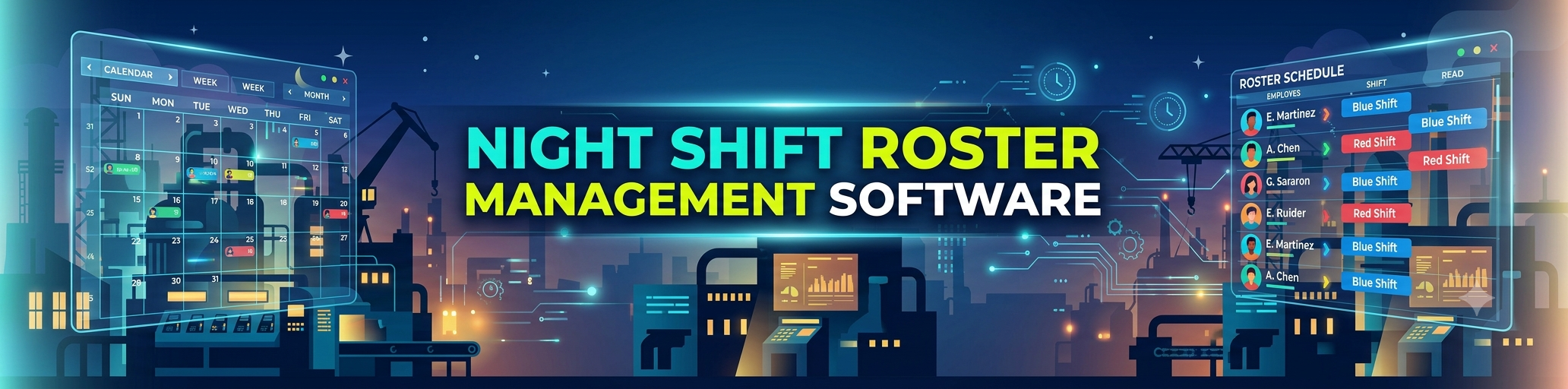
Night shift scheduling carries its own complexity: fair rotation of undesirable shifts, adequate rest periods between assignments, and making sure the right mix of certified skills is present overnight, not just adequate headcount. LeMeniz’s Night Shift Roster Management software, part of our Digital Factory suite, handles this complexity automatically.
Why Manual Night Rostering Is Hard to Get Right
Spreadsheet-based rostering struggles to enforce rest period rules consistently, often leading to unfair rotation patterns where the same staff repeatedly get assigned to less desirable night shifts, driving frustration and turnover.
What LeMeniz’s Software Delivers
- Automatic enforcement of mandatory rest periods between shift assignments
- Fair, transparent rotation of night and weekend shifts across the workforce
- Integration with skill matrix data, ensuring certified coverage for critical roles every night
- Advance schedule visibility, giving staff more notice for planning their personal lives
Supporting Consistent Night Operations
Beyond fair scheduling, LeMeniz’s Digital Factory keeps quality, safety, and machine status data visible around the clock, so an issue flagged at 3am gets the same visibility as one flagged during the day, regardless of reduced night-shift supervision.
Reducing Turnover Through Fair Scheduling
Manufacturers using LeMeniz’s roster system report improved retention among night shift staff, largely driven by the transparency and fairness the system enforces automatically, compared to informal manual scheduling.
Build Better Night Operations With LeMeniz
Since 2016, LeMeniz has helped manufacturers manage complex, multi-shift operations fairly and efficiently. Contact our team to modernize your night shift scheduling.
Benefits of Automated Night Shift Scheduling
A night shift roster management software can help manufacturers create more organized, predictable, and fair workforce schedules. By automating shift assignments, rest-period checks, and skill-based coverage, the system reduces the administrative workload for supervisors and minimizes scheduling conflicts. Employees can receive their schedules earlier, understand their assigned shifts clearly, and benefit from a more balanced rotation. For manufacturers, this can improve workforce utilization while ensuring critical roles are covered throughout the night. Over time, consistent digital scheduling also creates useful workforce data that managers can review to identify attendance patterns, staffing gaps, overtime requirements, and opportunities to improve shift planning.
Night Shift Roster Management Software: Key Takeaways
Getting night shift roster management software right is less about chasing the latest trend and more about building a habit of measuring before you change anything. Teams that succeed usually start with a single, well-defined process, track it consistently, and only then expand what they’ve learned to the rest of the plant. That disciplined, incremental approach to night shift roster management software tends to outperform a single big-bang rollout, because each step is validated with real data before the next one begins.
If you’re evaluating night shift roster management software for your own operation, it helps to talk with a team that has actually implemented it elsewhere, not just read about it. LeMeniz Technologies has supported manufacturers since 2011, and we’re happy to walk through real examples of night shift roster management software in practice before you commit to anything.
For broader context on manufacturing modernization standards, see the NIST manufacturing resource center. To see how night shift roster management software fits into a complete digital factory rollout, explore our Digital Factory suite from LeMeniz Technologies.
Teams rolling out night shift roster management software for the first time often underestimate how much of the early value comes from simply having consistent, accurate data to look at, rather than from any single advanced feature. Getting the basics right and building the habit of reviewing that data regularly tends to matter more in the first few months than choosing the most sophisticated available option.