
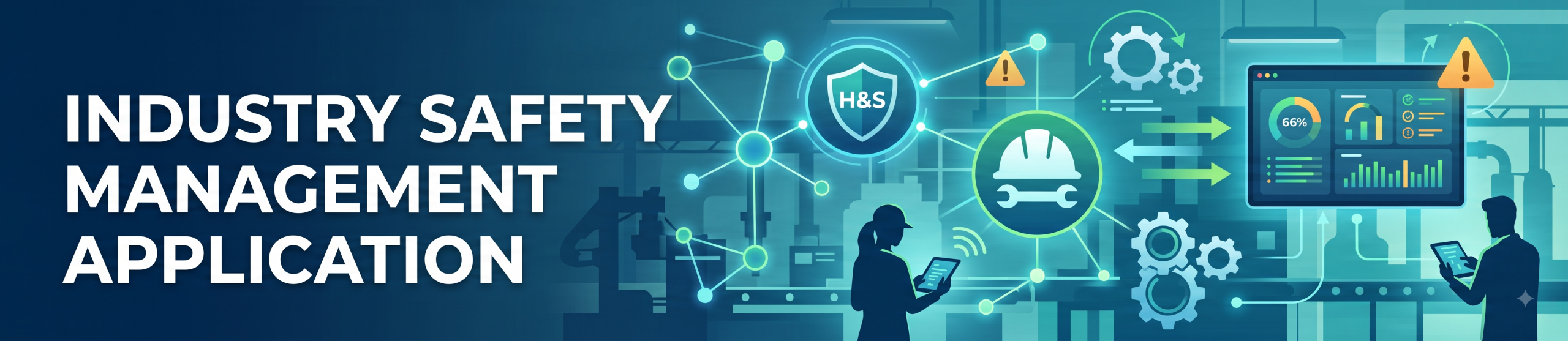
Industry safety management application is a topic more manufacturers are researching as they look to modernize operations, and this guide breaks down exactly what it involves and how to approach it in practice.
Factory safety management built on paper logs and laminated checklists has real limits: near-misses go unreported, safety officers only see conditions during scheduled walk-throughs, and audits mean digging through filing cabinets. LeMeniz’s Industry Safety Management application, part of our Digital Factory suite, replaces this with a connected, real-time safety system.
What the Application Covers
- Instant incident and near-miss reporting from any shop-floor device
- Digital work permit issuance and tracking, tied directly to specific equipment and tasks
- Automatic escalation and alerts for high-risk conditions the moment they’re reported
- A complete, timestamped safety record for every incident, permit, and inspection
Why Manufacturers Move Away From Paper Safety Logs
When safety data lives on paper, patterns across shifts and departments are nearly impossible to spot until a serious incident forces a review. LeMeniz’s digital safety platform makes recurring hazards, repeat incidents on the same machine, or overdue permits visible immediately, giving safety teams the chance to intervene before a minor issue becomes a serious one.
Built to Connect With the Rest of Your Plant
Safety data is most valuable when it isn’t siloed. LeMeniz’s Industry Safety Management application integrates with our Machine Management and Work Permit modules, so a machine under an active safety hold is automatically blocked from being scheduled for production, removing the risk of a scheduling error creating a safety incident.
Audit-Ready, Every Day
With every safety record digitized and searchable, compliance audits go from a stressful scramble to a quick export. Manufacturers using LeMeniz’s safety application report significantly faster audit preparation compared to their previous paper-based systems.
Talk to LeMeniz About Factory Safety Automation
Since 2016, LeMeniz has helped manufacturers across industries digitize their safety and compliance operations as part of a full Digital Factory rollout. Contact our team to see how the Industry Safety Management application can fit into your plant’s existing safety program.
Benefits of a Digital Safety Management System
A modern industry safety management application gives safety teams better visibility into workplace conditions and helps them maintain consistent safety procedures. Digital records make it easier to review incidents, monitor inspections, track work permits, and identify recurring risks. By connecting safety information with other manufacturing processes, businesses can build a more proactive safety culture while improving operational efficiency and compliance.
Industry Safety Management Application: Key Takeaways
Getting industry safety management application right is less about chasing the latest trend and more about building a habit of measuring before you change anything. Teams that succeed usually start with a single, well-defined process, track it consistently, and only then expand what they’ve learned to the rest of the plant. That disciplined, incremental approach to industry safety management application tends to outperform a single big-bang rollout, because each step is validated with real data before the next one begins.
If you’re evaluating industry safety management application for your own operation, it helps to talk with a team that has actually implemented it elsewhere, not just read about it. LeMeniz Technologies has supported manufacturers since 2011, and we’re happy to walk through real examples of industry safety management application in practice before you commit to anything.
To see how industry safety management application fits into a complete digital factory rollout, explore our Digital Factory suite from LeMeniz Technologies.
Teams rolling out industry safety management application for the first time often underestimate how much of the early value comes from simply having consistent, accurate data to look at, rather than from any single advanced feature. Getting the basics right and building the habit of reviewing that data regularly tends to matter more in the first few months than choosing the most sophisticated available option.